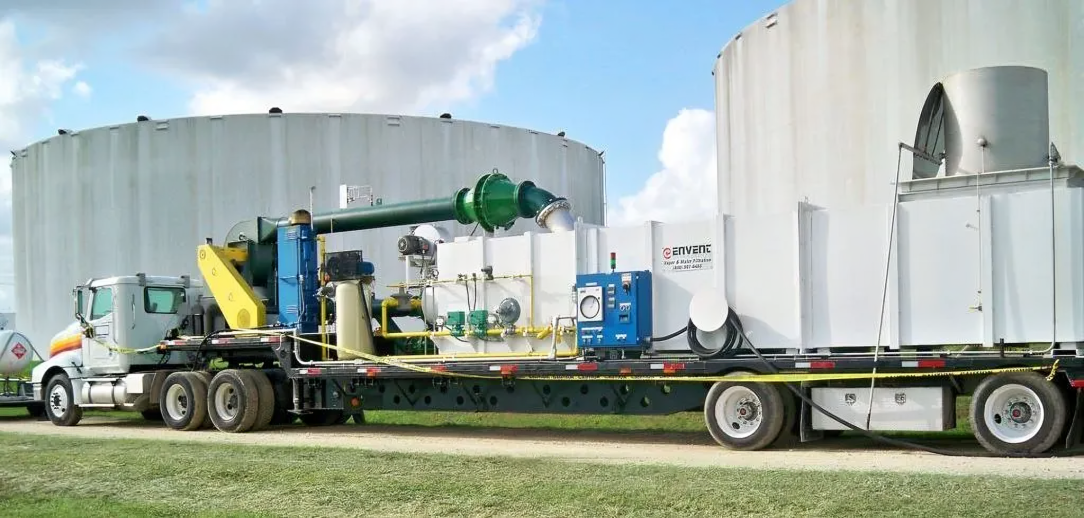
Most vapor control problems on a tank degassing job do not start when the crew shows up. They start weeks earlier, when the job gets scoped without the right information. A product type that was not accounted for, a permit condition that was not confirmed, a site constraint that nobody flagged until the equipment was already on the road. Those gaps show up as delays, compliance exposure, and additional work your turnaround schedule did not have room for.
We have been handling tank degassing for refineries and terminals across Dallas and North Texas since 1992, working with Tier-1 clients including ExxonMobil, Chevron, Shell, and Valero on the same types of tanks and permit conditions your facility operates under.
What Determines How a Dallas Tank Degassing Job Gets Scoped
Before any vapor control equipment goes on site, three things shape how the job is planned. Getting these right before the crew arrives is what separates jobs that close cleanly from those that leave open items for your environmental team.
The first factor is what the tank held before the outage. Crude oil, naphtha, gasoline, sour crude with elevated H2S, chemical compounds including ammonia, and intermediate refinery streams all behave differently during degassing. The vapor pressure, the combustion temperature required for destruction, and whether scrubbing is needed alongside thermal oxidation all come from the product. A job scoped for gasoline is not the same job as one scoped for sour crude. Treating them the same way creates gaps that your permit does not allow.
The second is what your TCEQ permit requires. Your permit governs the destruction efficiency threshold your vapor control must meet, whether flareless operation is required, and what post-job documentation your environmental team has to file. We work within your existing permit conditions from the first conversation and can support the pre-notification and emissions calculation process your team needs to submit to the TCEQ.
The third is what the site actually allows. An active refinery or terminal has constraints that a cleared turnaround pad does not. Adjacent units may still be running. Critical piping, pumps, and equipment may not be movable. The vapor control setup has to work within the site as it exists on the day the crew arrives. Those constraints are part of the scope from the start, not something we work around after mobilization.
These are the three factors we work through on every call before anything else. For a full breakdown of the tank types and vessel categories we handle, see our tank and vessel degassing service page.
How TCEQ Permit Conditions Affect Your Vapor Control Method
Facilities in the Dallas area operate under tighter VOC limits than most other Texas counties because of how the EPA classifies air quality in this region. That classification directly affects which vapor control methods your permit allows during a tank degassing event.
There are three main approaches used on storage tank degassing jobs in Texas. Understanding when each one applies is what keeps your facility inside its permit during the work.
Thermal oxidation: destroys the vapor stream by combustion at temperatures above 1,500 degrees Fahrenheit, achieving greater than 99.9% VOC and H2S destruction. This meets the EPA Best Available Control Technology standard for large storage tank events in Texas and is the method most TCEQ permits require for high-vapor-pressure products including naphtha, crude oil, and sour crude. It is also the only workable option when flaring is restricted or prohibited under your air permit conditions.
Carbon bed adsorption: captures VOCs on an activated carbon medium rather than destroying them. It is suitable for lower-vapor-pressure products and smaller tanks where vapor volumes are within the capacity of the bed. It is not workable on large-diameter tanks with high-volatility products because the breakthrough rate creates compliance exposure before the tank is cleared.
Direct venting: is only permitted under specific conditions where VOC concentrations and volumes fall below applicable permit thresholds. In the Dallas area, the EPA nonattainment classification means direct venting is rarely an option on anything other than very small process vessels with low-vapor-pressure products.
If you are not certain which method your TCEQ permit requires for a specific tank, that is the right question to confirm before the job is scoped, not after the contractor arrives on site.
What Your Environmental Team Should Have Ready Before the Job Starts
A well-prepared facility moves faster through the pre-job scoping process and has fewer issues once the crew is on site. Here is what your team should have organized before we arrive.
Current permit conditions for the tank: Your TCEQ air permit for that specific vessel governs destruction efficiency requirements, whether flareless operation is required, and what post-job documentation has to be filed. Having that permit information organized by tank means the scoping conversation is faster and the job is set up correctly from the start.
Product characterization for the vessel: The last product stored, the expected vapor pressure range, and any known contaminants including H2S or ammonia content all affect how the vapor control is configured. If your tank held sour crude or a chemical compound with specific scrubbing requirements, that information needs to be in the job scope before equipment is staged.
Confined space entry documentation: Your OSHA 29 CFR 1910.146 permit-required confined space program governs when and how your crew can enter the vessel after degassing is complete. That documentation should reflect current tank conditions before the job starts.
Site access details: Active piping, live adjacent units, and equipment that cannot be moved all affect where vapor control equipment can be staged. Knowing those constraints ahead of the mobilization call means we arrive with the right setup for your specific site.
The more of this your team has ready before the first call, the faster we can confirm the right vapor control approach for your specific vessel and permit conditions.
What a Compliant Tank Degassing Job Looks Like in the Field
“Your entire crew acted in a safe and professional manor taking the time to help us through our first Thermal Oxidation project.”
Inspection Supervisor, Hess Corporation
Our mobile thermal oxidizers achieve greater than 99.9% VOC and H2S destruction efficiency on every job. Every system we deploy includes real-time monitoring of combustion temperature, flow rate, and heat content throughout the work. Every job also produces the documentation your environmental team needs after the work closes. That includes continuous monitoring records, post-job emissions calculations, and EPA Method 25A stack test results where your permit requires them.
Our OQ-qualified technicians follow OSHA 29 CFR 1910.146 confined space entry protocols and hot work procedures on every tank job. Our 0.0 TRIR field safety record reflects applying those standards consistently on every job, not just on high-profile accounts.
Naphtha Tank Degassing on an Active Terminal Site
Large-diameter naphtha tanks are among the most difficult degassing jobs in refinery and terminal operations. High-volatility petroleum distillate with a Reid Vapor Pressure above 4 psia generates substantial BTEX and VOC emissions during roof landing and vapor displacement. Uncontrolled releases can trigger permit reviews, NSR obligations, and significant daily fines under applicable air rules. A vapor control system that requires relocating critical piping to fit on an active terminal is not a workable option.
The Situation
A major Gulf Coast terminal needed to degas a 123-foot diameter naphtha storage tank without stopping facility operations. The site had no room to relocate critical piping, pumps, or adjacent tanks. A full-size flare system was not workable given the site footprint. Air permit conditions and EPA 40 CFR Part 60 VOC and methane co-control standards applied throughout.
Our Approach
We secured a minor source permit through the expedited permitting process and mobilized the EMTOS-3500 mobile thermal oxidizer with an 8-foot by 25-foot footprint, staged directly adjacent to the tank vents without disrupting any site operations. Vapors were routed from the conservation vent and roof drains into the unit via temporary low-profile piping. The combustion chamber brought the naphtha vapor stream above 1,500 degrees Fahrenheit, where VOCs underwent greater than 99.4% destruction verified through EPA Method 25A stack testing. Real-time monitoring of temperature, flow, and heat content ran continuously throughout the job.
What the Results Showed
Post-job emissions calculations using EPA TANKS software confirmed VOC totals well within insignificant activity thresholds under applicable air rules, with no further reporting required. All site operations continued throughout the job without any equipment relocations. The degassing timeline came in ahead of the original schedule, reducing overall turnaround costs. Zero Title V deviations were recorded from start to finish. Read the full Naphtha Tank Degassing case study
Flareless Hydrocracker Turnaround at Port Arthur
Hydrocracker turnarounds carry some of the most complex vapor control requirements in refinery operations. The combination of high-pressure hydrogen service, sour gas streams, and strict flareless permit conditions leaves very little room for a vapor control contractor that has not handled this specific work before.
The Situation
A major refinery in Port Arthur needed to complete a full hydrocracker turnaround under flareless permit conditions. The vapor streams from the hydrocracker included hydrogen sulfide, ammonia, and hydrocarbon compounds requiring controlled destruction throughout the entire outage. Flaring was not permitted under the facility’s air permit conditions.
Our Approach
We deployed mobile thermal oxidizers and scrubber systems configured for the specific vapor stream composition coming off the hydrocracker. Vapor streams were routed through the scrubber for H2S and ammonia treatment before entering the thermal oxidizer for final VOC destruction. Continuous emissions monitoring ran throughout the turnaround, providing real-time compliance verification against the facility’s TCEQ permit conditions.
What the Results Showed
The turnaround was completed under flareless conditions with zero permit deviations. Post-job emissions documentation confirmed destruction efficiency above permit thresholds throughout every phase of the work. The refinery’s environmental team received the full compliance records package before crew demobilization. Read the full Port Arthur Flareless Hydrocracker Turnaround case study
Questions to Ask Any Vapor Control Contractor Before You Put Them on Your Approved Vendor List
Most facilities pre-qualify their vapor control contractors before a job comes up, not during one. These are the questions worth asking during that process.
Are your technicians OQ-qualified for the specific tasks they will perform on our site?
OQ qualification under DOT and OSHA standards is task-specific. A contractor who says their crew is qualified without specifying which tasks and which standards is not giving you the answer you need.
Can you operate flareless under our TCEQ permit conditions?
Not every contractor carries the equipment or the permit experience to run flareless on a large-diameter storage tank. If your permit requires it, confirm they have done it before on comparable jobs.
What post-job documentation do you provide?
Your environmental team needs continuous monitoring records, post-job emissions calculations, and stack test results to close out the compliance file. If a contractor cannot describe exactly what they provide, that gap will fall on your team after the job closes.
What is your TRIR?
A contractor’s safety record on tank degassing jobs is a direct reflection of how their crew applies confined space entry protocols and hot work procedures in the field. Our 0.0 TRIR across field operations reflects consistent application of those standards. See our safety page for the full breakdown.
Have you handled this specific product type before?
Sour crude, naphtha, and chemical compound tanks each require a different vapor control configuration. Experience on crude oil tanks does not translate directly to a naphtha job. Ask for a specific comparable reference.
What Other Services Support Tank Degassing Work at Dallas Facilities?
“In my opinion, Envent provides a service that is critical to Chevron maintaining its permit to operate. Envent helps Chevron in controlling vapors safely, reducing costs, and is fully committed to Chevron in a long-term relationship. Envent is the standard for a one-stop shop for engineering solutions and safe execution for vapor control.”
Supervisor of Product Integrity, Chevron
Refinery Turnaround Vapor Control
Planned FCCU, hydrocracker, crude unit, and coker outages require vapor control coordinated across the full turnaround schedule. We work inside your outage window alongside your turnaround contractor. See our refinery turnaround vapor control service.
Scrubbers and Odor Control
When the vapor stream from a sour tank or chemical vessel carries H2S or ammonia that requires scrubbing alongside thermal oxidation, we deploy mobile scrubber systems sized to the actual vapor load. Learn about our scrubbers and odor control service.
Pipeline Evacuation and Natural Gas Cross-Compression
For terminals that also manage pipeline operations, we handle line clearance and blowdown work with the same crew and equipment staging. See our pipeline evacuation service.
Common Questions About Tank Degassing Services in Dallas
What products do you degas from storage tanks at Dallas-area refineries?
We have handled crude oil, naphtha, gasoline, diesel, jet fuel, intermediate refinery streams, sour crude with elevated H2S, and chemical storage tanks containing ammonia and other process compounds. Each product requires a different approach to vapor capture, combustion temperature, and scrubbing, and we set up each job based on your actual product conditions. See our tank and vessel degassing page for a full breakdown.
Do you handle flareless tank degassing under TCEQ permit conditions?
Yes. When TCEQ permit conditions or client policy restricts open combustion, we deploy mobile thermal oxidizers that destroy the vapor stream rather than release it. Our systems meet EPA BACT standards and provide the stack testing and monitoring data your facility needs to demonstrate compliance after the job is complete.
How does tank degassing interact with TCEQ air permitting rules in Dallas?
The TCEQ requires facilities to control VOC emissions from large storage tank degassing events under Texas air quality rules. Facilities in the Dallas area operate under tighter VOC limits than most other Texas counties because of how the EPA classifies air quality in this region. We work within your existing permit conditions and can support the pre-notification and emissions calculation process your environmental team needs to submit to the TCEQ.
What safety protocols does your crew follow on tank degassing jobs?
We follow OSHA 29 CFR 1910.146 permit-required confined space procedures on every tank job where entry is required, and our hot work protocols apply whenever ignition sources are present near the vapor stream. Our 0.0 TRIR safety record reflects consistent application of these standards on every job. See our safety page for the full breakdown.
Can you mobilize for an emergency tank degassing call in Dallas?
Yes. Our 24/7 emergency line at 888-997-9465 is staffed around the clock. We confirm fleet availability and mobilize based on current equipment staging across Texas. We have responded to unplanned tank outages, roof failures, and incident-related degassing jobs on short notice for refining clients across the Gulf Coast and North Texas.
Do you provide emissions data and compliance documentation after the job?
Yes. Every job includes real-time monitoring of temperature, flow, and combustion performance. We provide post-job records that support your TCEQ permit compliance documentation. For projects that require stack testing, we coordinate EPA Method 25A sampling to verify destruction efficiency against your permit conditions.
Do you work with both refineries and terminal operators in the Dallas area?
Yes. We serve refinery clients managing tank farms within their operating units and terminal operators handling third-party product storage. The permit requirements and safety protocols run close across both facility types.
Can you handle tank degassing as part of a larger turnaround at a Dallas refinery?
Yes. We routinely provide tank and vessel degassing as part of broader refinery turnaround support, working alongside your turnaround contractor within the overall outage schedule. For turnaround-specific vapor control work, see our refinery turnaround vapor control page.
What documentation do you provide to support TCEQ compliance records after the job?
We provide continuous monitoring logs, post-job emissions calculations, and EPA Method 25A stack test results where your permit requires them. Your environmental team receives the full records package needed for permit compliance documentation and any required regulatory reporting before we demobilize.
What tank roof configurations do you handle?
We have worked on fixed roof tanks, floating roof tanks, and internal floating roof vessels across crude oil, refined product, and chemical service. The roof configuration affects how vapors are captured and routed during degassing, and we set up the vapor capture approach based on the specific roof type and vent configuration on your vessel.
Get Your Vapor Control Plan Reviewed Before Your Next Tank Goes Down
Confirm your vapor control plan before your next scheduled tank outage, not after the crew is already on the road. We have handled tank degassing for major refining and terminal clients since 1992. Our OQ-qualified field crews, mobile thermal oxidizers, and TCEQ-compliant vapor control process mean your tank comes out of service safely and your facility stays inside its permit limits.
Call 888-997-9465 or Request a Quote and our team will scope the job based on your actual conditions.
