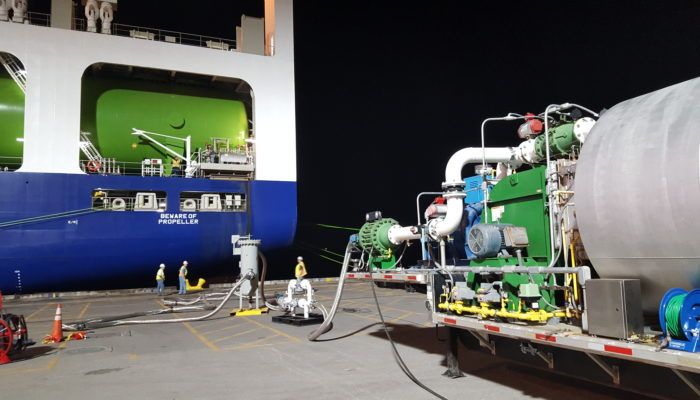

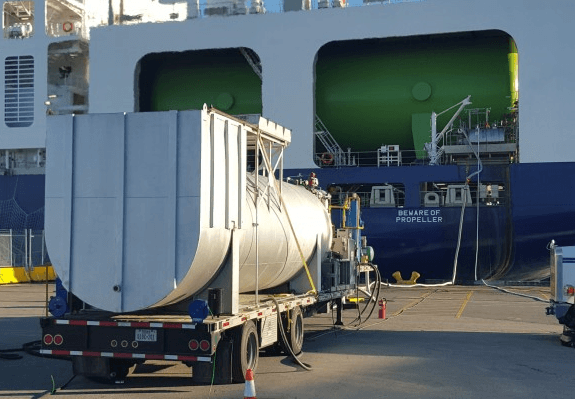
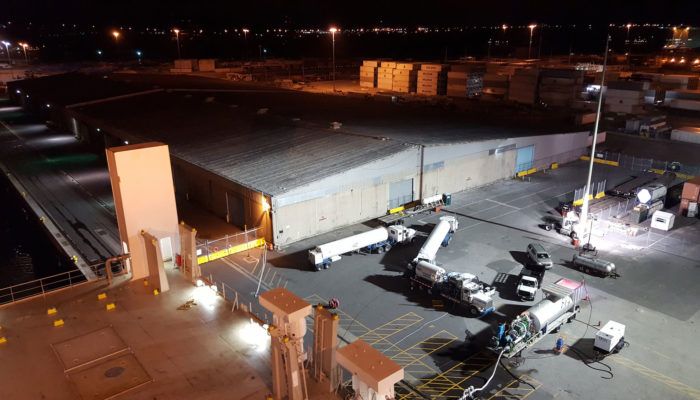
Featured Project: Cryogenic Degassing of LNG Fuel Tanks on a U.S.-Flagged Container Ship – USCG 33 CFR 127 & Class NK Compliance
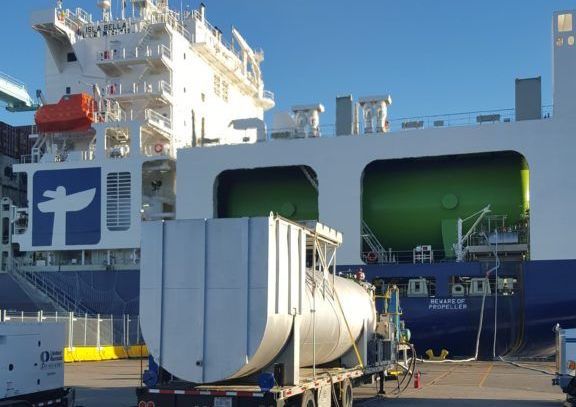
The first U.S.-built LNG-fueled container ship required valve repairs on its twin Type-C cryogenic fuel tanks (IMO IGC Code). Each 1,200 m³ tank had to be taken offline, completely degassed of methane vapors, and inerted with nitrogen — all while the vessel remained on its commercial schedule in Jacksonville, FL.
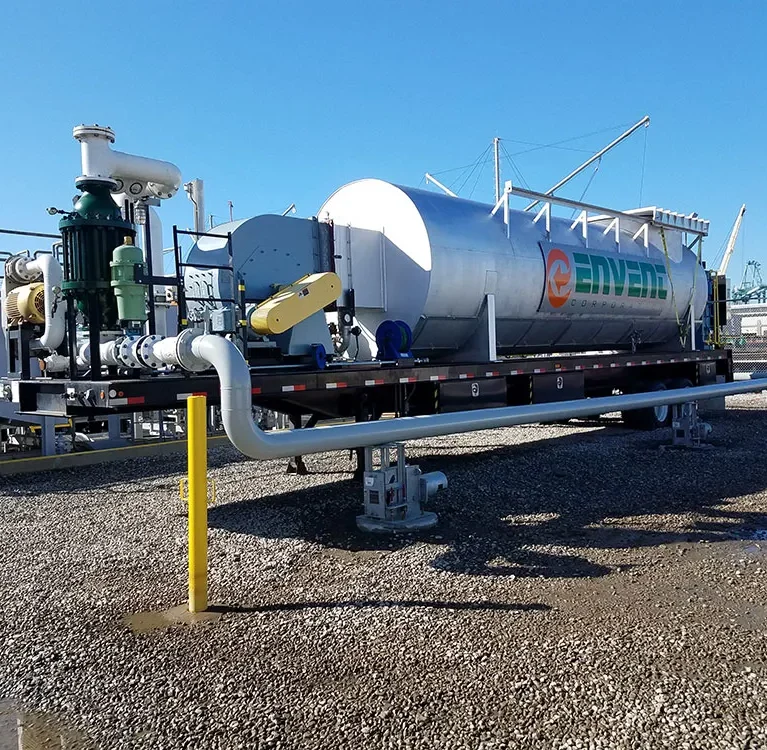
This was the first time in the U.S. that a 42 MMBTU/hr mobile thermal oxidizer was used for cryogenic marine LNG tank degassing under full U.S. Coast Guard Captain of the Port (COTP) oversight.
The Challenge: Extreme Cryogenic Conditions + Zero Room for Error
- LNG stored at −260 °F and 80 PSIG
- Carbon steel components limited to −20 °F minimum (ASME Section VIII)
- Liquid carryover risk during initial boil-off
- High humidity in Jacksonville would freeze air-to-air heat exchangers
- Strict electrical isolation required between ship (seawater ground) and shore (earth ground)
- Full compliance with 33 CFR 127 (Waterfront LNG Facilities), 46 CFR 154 (LNG cargo systems), USCG NVIC 01-2011, and Class NK rules
- Zero schedule flexibility — ship had to sail on time
Envent’s Marine-Engineered Solution
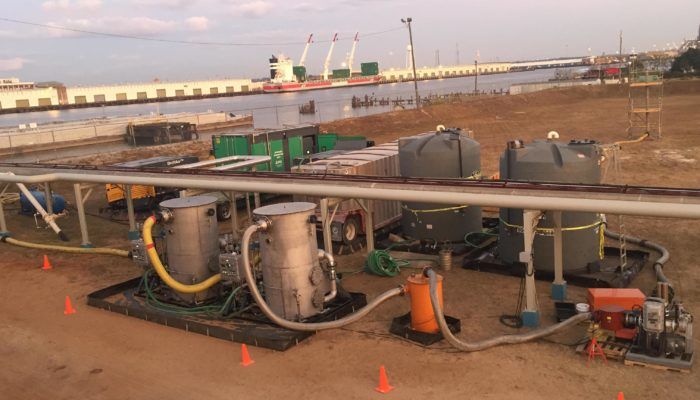
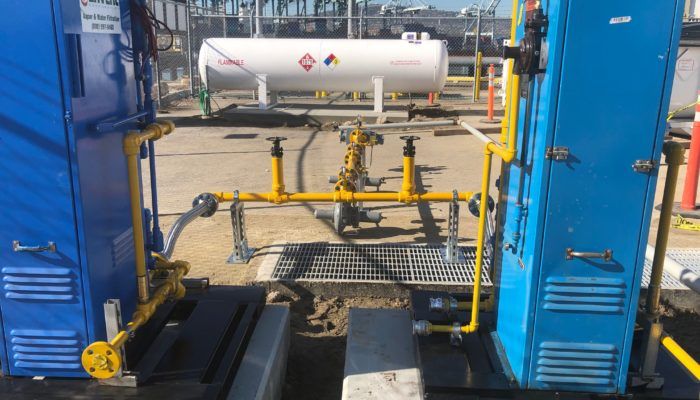
Envent designed and executed a first-of-its-kind mobile system:
- Cryogenic Vapor Heating
- Initial air-to-air exchanger replaced with hot nitrogen splice-in
- Nitrogen pumper truck delivered 250 SCFM of 200 °F N₂ via tee/check-valve/TI
- Maintained first carbon-steel component (knockout pot) at −10 °F — safely above brittle fracture range
- Vapor Destruction
- EMECS 42 (42 MMBTU/hr enclosed thermal oxidizer)
- 99.9% destruction efficiency of methane (verified by USCG & Class NK)
- Continuous temperature, flow, and LEL monitoring
- Electrical Isolation
- Insulating flanges on final two shore-to-ship hoses
- Eliminated galvanic current risk between seawater and earth ground
- Regulatory & Safety Coordination
- Daily PIC (Person-in-Charge) meetings with USCG COTP Jacksonville, Fire Marshal, Captain of the Port, and Ship Master
- Hot-work permits, gas-free certificates, and inert entry procedures per 33 CFR 127.1603
- Simultaneous Operations (SIMOPS) plan approved by Class NK
The project ran 24/7 for two months with zero incidents, zero delays, and zero LEL excursions.
Proven Results – Industry First, Zero Incidents
| Benefit | Delivered Outcome |
|---|---|
| Safety | Zero flash/fire risk despite −260 °F boil-off |
| Regulatory Compliance | Full USCG, Class NK, ABS, and 33 CFR 127 approval |
| Schedule | Ship sailed on commercial schedule — no delay |
| Innovation | First U.S. use of 42 MMBTU mobile oxidizer on LNG ship |
| Client Recognition | “Flawless execution” — USCG COTP & Ship Master |
This project set the U.S. precedent for safe, mobile cryogenic marine degassing and remains the benchmark for LNG-fueled vessel maintenance nationwide.